

- University
- Academic
- Schools/Vocational Schools
- Vocational School of Justice
- Vocational School
- Vocational School
- Department of Banking and Insurance (Turkish)
- Department of Computer Programming (Turkish)
- Department of Foreign Trade (Turkish)
- Department of Graphic Design (Turkish)
- Department of Interior Design (Turkish)
- Department of Construction Technology (Turkish)
- Department of Occupational Health and Safety (Turkish)
- Department of Media and Communication (Turkish)
- Department of Architectural Restoration (Turkish)
- Department of Radio and Tv Programming (Turkish)
- Department of Civil Aviation Cabin Services (Turkish)
- Department of Civil Aviation Transportation Management (Turkish)
- Department of Tourism and Hotel Management (Turkish)
- Department of Applied English Translation
- Vocational School Of Health Services
- Vocational School Of Health Services
- Department of Child Development (Turkish)
- Department of Physiotherapy (Turkish)
- Department of Paramedic (Turkish)
- Department of Opticianry (Turkish)
- Department of Medical Documentation and Secreteriat (Turkish)
- Department of Medical Imaging Techniques (Turkish)
- Department of Medical Laboratory Techniques (Turkish)
- Department of Elderly Care (Turkish)
- School of Applied Management Sciences
- School of Foreign Languages
- Faculties
- Faculty of Arts and Sciences
- Faculty of Fine Arts and Design
- Faculty of Law
- Faculty of Communication
- Faculty of Business
- Faculty of Engineering
- Faculty of Engineering
- Department of Computer Engineering
- Department of Biomedical Engineering
- Department of Electrical and Electronics Engineering
- Department of Industrial Engineering
- Department of Food Engineering
- Department of Genetics and Bioengineering
- Department of Aerospace Engineering
- Department of Civil Engineering
- Department of Mechanical Engineering
- Department of Mechatronics Engineering
- Department of Software Engineering
- Faculty of Health Sciences
- Medicine
- Graduate School
- Common Courses
- Schools/Vocational Schools
- Research
- Research Centers
- Library
- Smart Campus
- Technology Transfer Office
- İzmir Sciencepark
- Continuous Education Center (EKOSEM)
- Children's University
- Ethics Committee
- Teaching and Learning Center (EKOEĞİTİM)
- Psychology Application and Research Center
- Researcher Training Coordinatorship
- Research Collaborations And Innovation Coordinatorship
- Campus
- INTERNATIONAL
- Contact
- 25TH YEAR
FACULTY OF FINE ARTS AND DESIGN
Department of ArchitectureGEHU 202 | Course Introduction and Application Information
| Course Name |
Current Issues in World Politics
|
|
Code
|
Semester
|
Theory
(hour/week) |
Application/Lab
(hour/week) |
Local Credits
|
ECTS
|
|
GEHU 202
|
Fall/Spring
|
3
|
0
|
3
|
6
|
| Prerequisites |
None
|
|||||
| Course Language |
English
|
|||||
| Course Type |
Service Course
|
|||||
| Course Level |
First Cycle
|
|||||
| Mode of Delivery | - | |||||
| Teaching Methods and Techniques of the Course | DiscussionCase StudyLecture / Presentation | |||||
| National Occupation Classification | - | |||||
| Course Coordinator | ||||||
| Course Lecturer(s) | ||||||
| Assistant(s) | - | |||||
| Course Objectives | This class aims to provide students with a general perspective on the main issues and debates in current global politics. It intends to deepen students' understanding of the world by covering various debated issues within the scope of international politics, economics and sociology in a healthy discussion environment. |
| Learning Outcomes |
The students who succeeded in this course;
|
| Course Description | This course will discuss the main issues in today's world such as globalization, immigration crisis, terrorism, racism, social movements, global warming, gender inequality, the rise of China, Covid-19 pandemic and rising populist trends. The course will analyze the political, economic, social and environmental dimensions of these much-debated conflicts that shape the global world. |
| Related Sustainable Development Goals |

|
|
|
Core Courses | |
| Major Area Courses | ||
| Supportive Courses | ||
| Media and Management Skills Courses | ||
| Transferable Skill Courses |
WEEKLY SUBJECTS AND RELATED PREPARATION STUDIES
| Week | Subjects | Related Preparation |
| 1 | Introduction to some of the basic trends in world politics. | |
| 2 | Globalization | Manfred B. Steger, Globalization: a very short Introduction. Chapter 5, pp. 83-94. |
| 3 | Global Economic Inequality | To see 1: “True Cost”, documentary 2: “The New Rulers of the World”, documentary To read: Manfred B. Steger, Globalization: a very short Introduction. Chapter 5, pp. 83-94. |
| 4 | The Rise of China | To see: “China: Power and Prosperity”, by PBS, documentary. To read /listen to: “Making China Great Again”, article by Evan Osnos (The New Yorker). Available online. |
| 5 | Race and Racism | To see: “Good Hair: Perceptions of Racism” - Short film. To read: Ali Rattansi, A very short introduction: Racism. Chap.1, pp 4-12. |
| 6 | Terrorism, War, and Security | To see: “Hotel Rwanda”, film. To read: “Routledge Handbook of Security studies” edt. by Myriam Dunn Cavelty and Thierry Balzacq, Part 2, section 13: “Terrorism and counter-terrorism” by Oldrich Bures |
| 7 | Climate Change | To see: “This Changes everything”, documentary by Naomi Klein To read: “Climate Change: what everyone needs to know”, by Joseph Room, the preface. |
| 8 | Global migration crisis | To see: “For Sama”, film. To read: “International Migration: A very short introduction” by Khalid Koser (2017) Chapter 1: Why migration matters? |
| 9 | Midterms | |
| 10 | Social Movements | To see: “Athena”,film. To read: “Social Movements and New Technology”, by Victoria Carty (2018), Introduction: the digital impact on social movements. pp.1-17. |
| 11 | Democratic Backsliding and the Rise of Populism | To see: “Die Welle”- the Wave (2008), film. To read: “What is Populism?” By Jan-Werner Müller (2016), introduction: Is everyone a populist? Pp. 1-6. |
| 12 | Gender in Global Politics | To see: “Milk” by Gus Van Sant, film. To read: “The gendered society” by Michael Kimmel, introduction: Human beings, an engendered species, pp. 1-9. |
| 13 | Student Presentations | |
| 14 | Student Presentations | |
| 15 | Student Presentations | |
| 16 | Final Exam |
| Course Notes/Textbooks | Mark Beeson and Nick Bisley, Issues in 21st Century World Politics (Palgrave McMillian, 2010). |
| Suggested Readings/Materials |
EVALUATION SYSTEM
| Semester Activities | Number | Weigthing |
| Participation | ||
| Laboratory / Application | ||
| Field Work | ||
| Quizzes / Studio Critiques | ||
| Portfolio | ||
| Homework / Assignments | ||
| Presentation / Jury |
1
|
20
|
| Project | ||
| Seminar / Workshop | ||
| Oral Exams | ||
| Midterm |
1
|
40
|
| Final Exam |
1
|
40
|
| Total |
| Weighting of Semester Activities on the Final Grade |
2
|
60
|
| Weighting of End-of-Semester Activities on the Final Grade |
1
|
40
|
| Total |
ECTS / WORKLOAD TABLE
| Semester Activities | Number | Duration (Hours) | Workload |
|---|---|---|---|
| Theoretical Course Hours (Including exam week: 16 x total hours) |
16
|
3
|
48
|
| Laboratory / Application Hours |
16
|
0
|
|
| Study Hours Out of Class |
11
|
2
|
22
|
| Field Work |
0
|
||
| Quizzes / Studio Critiques |
0
|
||
| Portfolio |
0
|
||
| Homework / Assignments |
0
|
||
| Presentation / Jury |
1
|
20
|
20
|
| Project |
0
|
||
| Seminar / Workshop |
0
|
||
| Oral Exam |
0
|
||
| Midterms |
1
|
30
|
30
|
| Final Exam |
1
|
30
|
30
|
| Total |
150
|
COURSE LEARNING OUTCOMES AND PROGRAM QUALIFICATIONS RELATIONSHIP
|
#
|
Program Competencies/Outcomes |
* Contribution Level
|
|||||
|
1
|
2
|
3
|
4
|
5
|
|||
| 1 |
To be able to offer a professional level of architectural services. |
-
|
-
|
-
|
-
|
-
|
|
| 2 |
To be able to take on responsibility as an individual and as a team member to solve complex problems in the practice of design and construction. |
-
|
-
|
-
|
-
|
-
|
|
| 3 |
To be able to understand methods to collaborate and coordinate with other disciplines in providing project delivery services.
|
-
|
-
|
-
|
-
|
-
|
|
| 4 |
To be able to understand, interpret, and evaluate methods, concepts, and theories in architecture emerging from both research and practice. |
-
|
-
|
-
|
-
|
-
|
|
| 5 |
To be able to develop environmentally and socially responsible architectural strategies at multiple scales. |
-
|
-
|
-
|
-
|
-
|
|
| 6 |
To be able to develop a critical understanding of historical traditions, global culture and diversity in the production of the built environment. |
-
|
-
|
-
|
-
|
-
|
|
| 7 |
To be able to apply theoretical and technical knowledge in construction materials, products, components, and assemblies based on their performance within building systems. |
-
|
-
|
-
|
-
|
-
|
|
| 8 |
To be able to present architectural ideas and proposals in visual, written, and oral form through using contemporary computer-based information and communication technologies and media. |
-
|
-
|
-
|
-
|
-
|
|
| 9 |
To be able to demonstrate a critical evaluation of acquired knowledge and skills to diagnose individual educational needs and direct self-education skills for developing solutions to architectural problems and design execution. |
-
|
-
|
-
|
-
|
-
|
|
| 10 |
To be able to take the initiative for continuous knowledge update and education as well as demonstrate a lifelong learning approach in the field of Architecture. |
-
|
-
|
-
|
-
|
-
|
|
| 11 |
To be able to collect data in the areas of Architecture and communicate with colleagues in a foreign language ("European Language Portfolio Global Scale", Level B1) |
-
|
-
|
-
|
-
|
-
|
|
| 12 |
To be able to speak a second foreign language at a medium level of fluency efficiently. |
-
|
-
|
-
|
-
|
-
|
|
| 13 |
To be able to relate the knowledge accumulated throughout the human history to their field of expertise. |
-
|
-
|
-
|
-
|
-
|
|
*1 Lowest, 2 Low, 3 Average, 4 High, 5 Highest






















NEWSALL NEWS


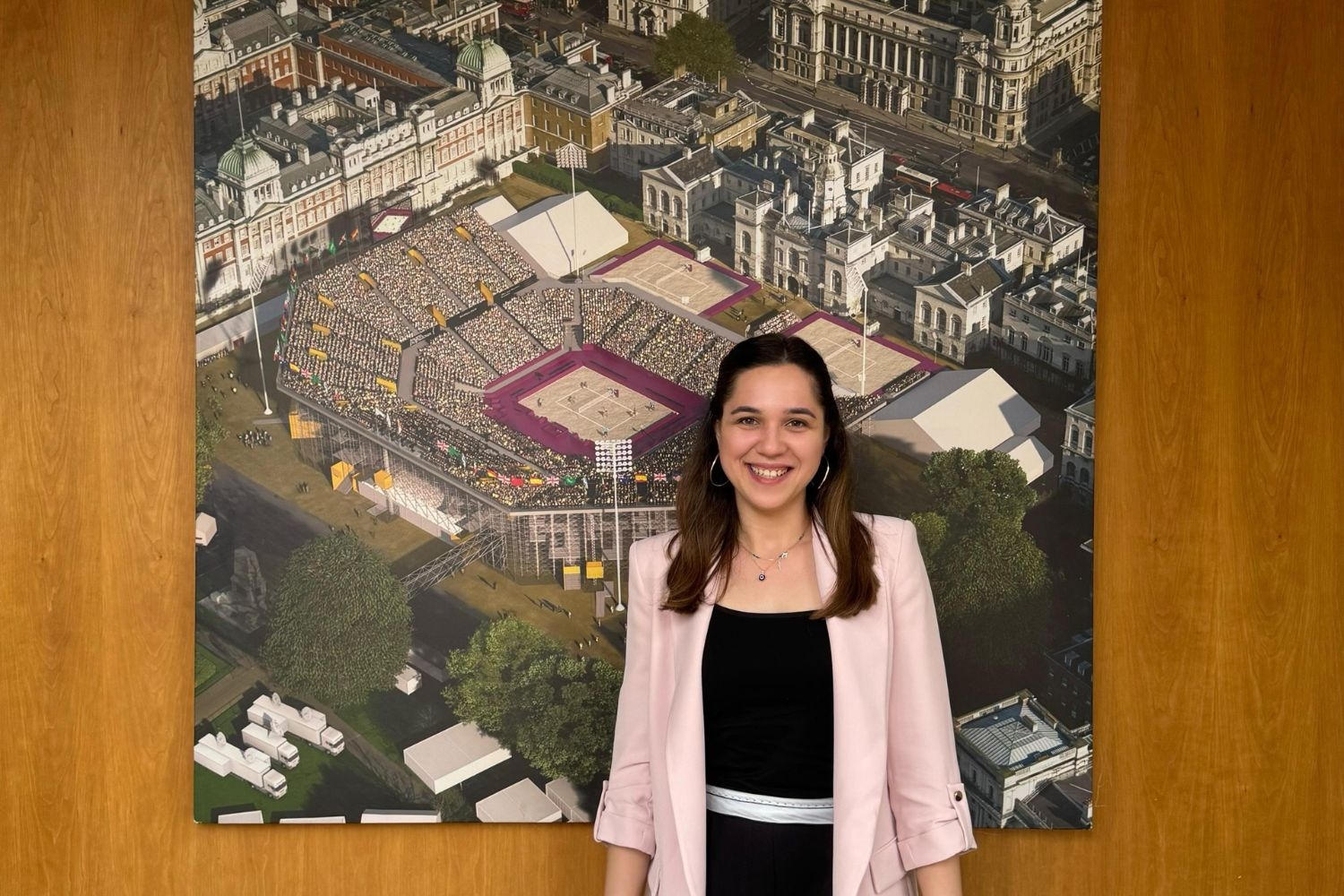
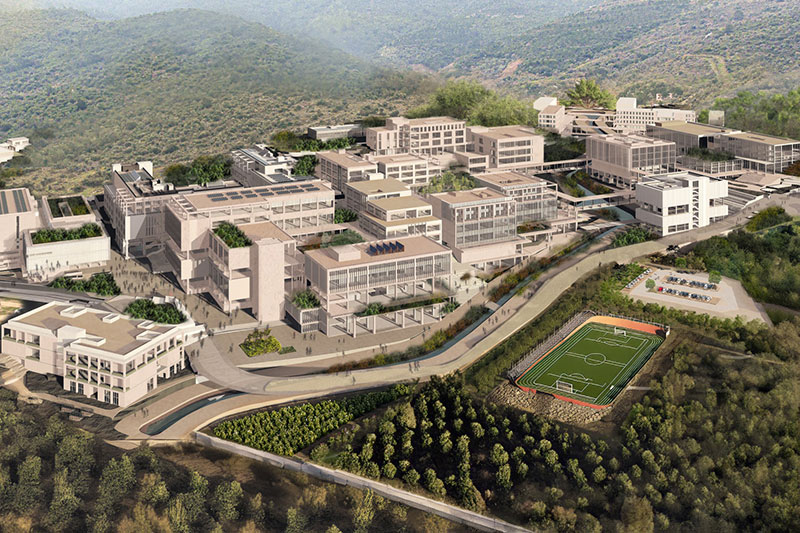
IZMIR UNIVERSITY OF ECONOMICS GÜZELBAHÇE CAMPUS
DetailsGLOBAL CAREER
As Izmir University of Economics transforms into a world-class university, it also raises successful young people with global competence.
More..CONTRIBUTION TO SCIENCE
Izmir University of Economics produces qualified knowledge and competent technologies.
More..VALUING PEOPLE
Izmir University of Economics sees producing social benefit as its reason for existence.
More..
You are one step ahead with your graduate education at Izmir University of Economics.